What should you eat in Rome beyond pasta?
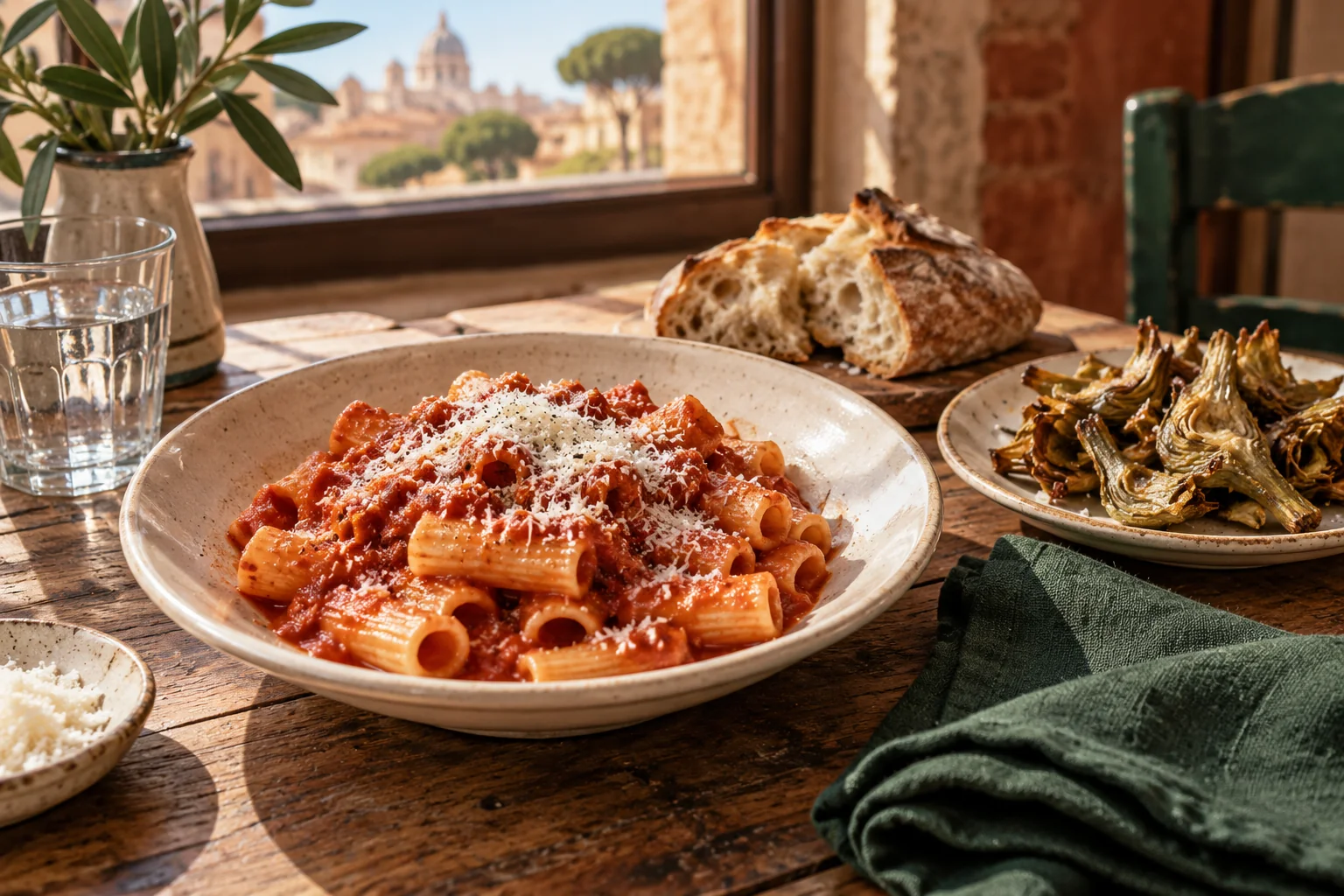
Rome’s pasta dishes deserve their fame, but they do not need to organize every meal. A day built around a sweet bun, a savory snack, vegetables and a carefully chosen main course can reveal another side of the city’s food. The most useful approach is curiosity in manageable portions: choose something you want to understand and enjoy, rather than trying to finish a complete regional menu by lunchtime.
Our dining collection includes experiences that can add explanation to tasting. If you prefer to explore independently, begin by reading the menu, asking about unfamiliar ingredients and checking how food is priced. A short conversation about a portion or preparation often improves the meal more than another list of supposedly essential dishes saved on your phone.
Start sweet if that suits your morning
A maritozzo is a Roman sweet bun commonly associated with a generous filling of whipped cream. The municipal food account traces its cultural history and changing uses. You do not need to reproduce every historical anecdote to appreciate the contrast of soft bread and cream. Consider sharing if you want a small taste rather than a large breakfast, and ask how the particular bakery prepares it.
There is no prize for eating a traditional food at the supposedly perfect hour. If a sweet breakfast does not suit you, leave it for another pause or choose something else. Food customs can provide context without becoming rules that override appetite. Check ingredients directly whenever dietary restrictions matter; a familiar-looking bun can contain ingredients that are not obvious from its appearance.
Let a snack be a snack
Supplì, the rice-based fried snack associated with Rome, is one possibility described in the official street-food guide. Recipes and fillings vary, so do not assume that every version is vegetarian or that the same name guarantees an identical preparation. Ask what is inside and consider how a hot, substantial snack fits with the meal you plan to have afterwards.
At a pizza counter, establish the pricing method before ordering: the cost may depend on weight, portion or the specific product. Pointing to a large rectangle without clarifying the amount can produce more lunch than expected. Choose one or two things that interest you and eat them while they are in good condition, rather than collecting a large selection solely to arrange an impressive photograph.
Give vegetables a place in the meal
Roman artichoke traditions provide a useful lesson in how preparation changes the same ingredient. The municipal recipe page distinguishes Roman-style and Roman-Jewish fried preparations. Seasonal availability, the specific variety and the kitchen’s method matter more than finding a dish name on every menu throughout the year. Ask what is fresh and how it is prepared on the day you visit.
Do not infer that a vegetable dish is automatically suitable for every diet or free from cross-contact. Explain relevant needs clearly to the kitchen before ordering. If a particular ingredient is unavailable, accept the seasonal alternative rather than treating the meal as a failed cultural checklist. The point is to eat well in the place and season you are actually visiting.
Use the neighborhood as context, not a guarantee
Testaccio makes an interesting setting for thinking about food, trade and work. Jewish Rome provides another historical context, but its living community should not be reduced to a menu. A restaurant’s location does not by itself certify a religious preparation standard, establish an ingredient’s origin or guarantee that every dish follows one historical recipe. Ask the relevant question directly rather than relying on the neighborhood’s reputation.
Similarly, a busy room may indicate popularity, but it does not tell you whether the menu, noise level, price or waiting time suits your group. Read the displayed prices, including any service or cover information, and decide before settling in. A good meal begins with clear expectations; discovering an important condition after ordering is an avoidable distraction from the food.
Choose a food tour for what it explains
When comparing experiences, look at actual inclusions: number and type of tastings, drinks, dietary accommodation, walking distance and whether the route replaces a meal. A tour can be valuable because it links food with people, places and production. It should not need exaggerated claims about secret access or the only authentic version of a dish to make that value clear.
For the city’s celebrated pasta quartet, use the specialist Roman pasta field guide. Then give another meal to something different. Fit it into the four-day city plan with enough time to sit, taste and talk. Rome offers plenty to eat; the challenge is leaving enough appetite, attention and good humor to enjoy your choices.
Sources & further reading
Turn a good read into a great day.
Find a highly rated Rome experience that brings these stories to life.
Explore related experiences →