Testaccio: reading a Roman neighborhood through food and work
Testaccio rewards visitors who are curious about how a city is supplied, fed and kept working. Instead of beginning with an emperor’s portrait, begin with a container, a market counter or the size of an industrial building. These are clues to Roman history too. A neighborhood walk here can connect ancient trade with more recent labor and the ordinary decisions people make about lunch.
Treat Testaccio as a living district rather than a stage designed to provide “authentic Rome.” People shop, commute, deliver goods and meet friends here. Your visit improves when it makes room for those activities. Start with a small loop and a meal rather than a long list of mandatory tastings. Our dining experiences offer guided possibilities, but an independent walk can also be thoughtful and rewarding.
A hill made from the business of feeding Rome
Monte Testaccio is an artificial mound made largely from fragments of transport amphorae. The municipal archaeological account connects it to the ancient river-port and warehouse area, explaining the organized disposal of containers associated especially with olive oil. That simple fact makes the mound an unusually vivid monument: repeated commercial transactions eventually created something visible at the scale of a landscape.
Imagine the individual decisions behind that accumulation without pretending to reconstruct a particular worker’s life. A container arrived, its contents were used and its remains needed somewhere to go. Ask what a modern city’s packaging might reveal to a future archaeologist. This is a useful history exercise precisely because it starts with material evidence rather than an invented story about a named ancient resident.
Public streets do not mean unrestricted archaeological access
Seeing the area around the mound is different from entering the archaeological monument. Check current authorized visiting arrangements rather than assuming that a gate, staircase or path is open to casual exploration. Do not climb barriers or treat pottery fragments as souvenirs. A walk can remain interesting even when a specific site requires a separate booking or is unavailable on your date.
Use that distinction throughout the district. A former industrial complex may now host cultural activities, but individual rooms and events have their own access conditions. The official neighborhood overview identifies the Mattatoio among Testaccio’s important cultural and industrial places. Check its actual program before building a visit around a particular exhibition, and keep the outdoor neighborhood walk worthwhile in its own right.
Let food provide questions rather than a checklist
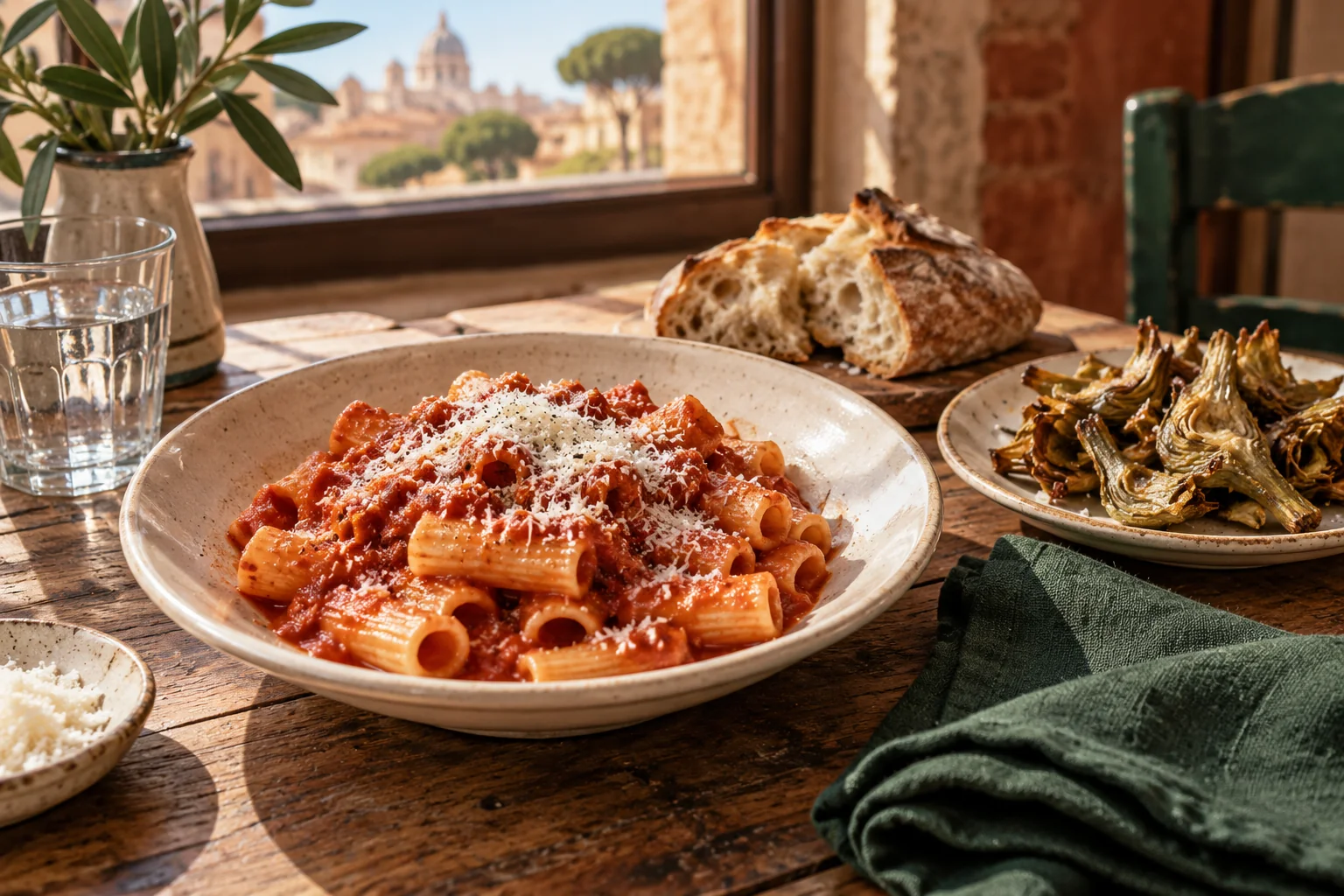
At a market or counter, look for something you genuinely want to eat. Ask what is in it, how large a portion is and whether it is served to take away or at a table. A tasting can help you understand ingredients and local habits, but ordering several foods solely for a photograph may leave you full before the meal you most wanted.
Our guide to Roman food beyond pasta introduces useful possibilities without claiming that every stall prepares them identically. If you choose a food tour, compare the number of stops, included drinks, dietary accommodation and the amount of walking. “Food included” does not tell you whether the experience replaces lunch, offers small samples or concentrates mainly on historical explanation between tastings.
Notice the spaces between the famous stops
Pause around Piazza Testaccio and pay attention to the relationship between buildings, shopfronts and public space. What activities share the square? Where do people cross directly, and where do they stop? You are looking at a neighborhood’s present use, not performing an inspection of its residents. Avoid photographing people at close range without permission, especially while they are eating or working.
An enjoyable small exercise is to choose one material detail: an awning, a doorway, a painted sign or the paving beneath your feet. Follow its variations for a few streets. The walk becomes more specific, and you are less likely to spend the entire time consulting a map. Keep deliveries and entrances clear whenever the group stops for an explanation or photograph.
Build a sensible connection to the rest of Rome
The Aventine garden walk offers a contrasting outing on another part of the nearby urban landscape, while Centrale Montemartini develops the relationship between ancient objects and industrial Rome. Choose one extension according to your energy and the confirmed opening arrangements. Do not assume that places sharing a broad area can all fit comfortably between breakfast and a timed afternoon reservation.
Testaccio works particularly well as a change of pace after a major monument. For the archaeological part of another day, use the specialist Colosseum Tour Hub. Here, give different evidence its turn: transport containers, labor, public squares and food. You may leave with a modest meal and a much larger idea of what has kept Rome alive.
Sources & further reading
Turn a good read into a great day.
Find a highly rated Rome experience that brings these stories to life.
Explore related experiences →