Rome’s Villa Balestra: how do you plan a garden visit on the Parioli hill?

A small garden can be a better afternoon choice than a larger park when you want a pause rather than a second expedition. Villa Balestra, on Rome’s Parioli hill, suits that kind of visit. Give it a modest purpose: a walk, a look at the planting and time to sit. The useful preparation is less about collecting landmarks and more about choosing a sensible entrance, allowing for the hill and understanding which parts belong to the public garden.
Treat the hill as part of the journey
Roma Capitale lists the entrance at Via Bartolomeo Ammannati 3 and free admission. Put that entrance into your route planning rather than aiming at the middle of the green patch on a map. A short distance measured from a nearby road can disguise a change in level or an indirect approach. If slopes, steps or a longer uphill walk would affect your day, check the actual approach before setting out.
The heritage authority describes the surviving garden as occupying a tuff spur above Viale Tiziano and the Tiber. You are visiting an elevated piece of the city, not a riverside promenade. That helps explain the appeal of a garden stop here, but it does not guarantee an unobstructed panorama from every path or bench. Trees, weather and your position all shape what you can see.
Notice the scale of what survives
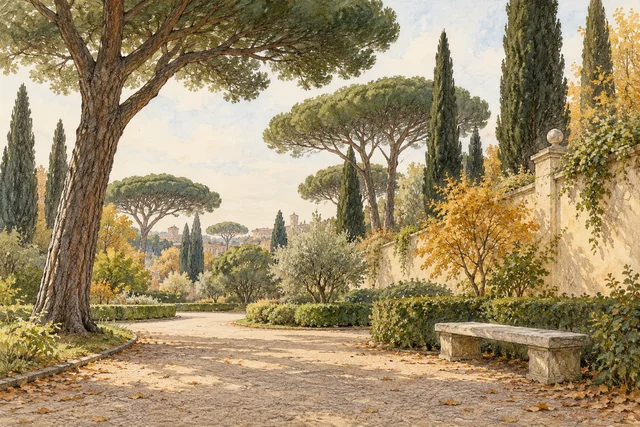
The public garden is a remnant of a larger historic villa landscape. The heritage account describes an elliptical layout, planted beds and parallel avenues within a relatively compact area. You can read those relationships by walking slowly: where does a path frame a bed, where does planting hide a boundary, and where does the garden open toward the surrounding city?
There is no need to assign a historical date to every tree or feature. A living garden changes through growth, maintenance and replacement. Instead, try distinguishing the broad plan from its current planting. A curve can remain legible even when the vegetation has changed. This gives you something worthwhile to notice without turning an ordinary park visit into an unsupported reconstruction of a vanished estate.
Keep the public garden separate from private buildings
The villa name can suggest that a historic house visit is included. The municipal heritage description makes a different distinction: associated historic buildings, including the casino with its loggia, lie outside the public garden and are private. Do not treat an attractive façade, gate or neighbouring address as an invitation to enter. Your visit here is to the accessible garden areas.
That boundary is useful when planning the rest of the afternoon. If you want an interior, choose a separately confirmed museum or venue, with its own opening arrangements. If you want green space, allow the park to be enough. Combining two incompatible expectations often creates unnecessary disappointment: a garden does not need to supply a palace tour to justify a pleasant hour outdoors.
Use the seasonal schedule, then check the day
The municipal and heritage pages checked on 29 October 2026 agree on seasonal hours: 07:00 to 00:30 from April through October, and 07:00 to 20:00 from November through March. The upcoming change is therefore worth noticing if your stay crosses into November. Current notices, maintenance or weather-related restrictions can still affect access, so use the official information again shortly before you go.
A published late closing time is not a recommendation to make your first visit after dark. Daylight makes it easier to understand paths, planting and changes of level. Bring only what suits a simple garden break, dispose of litter properly and leave planted areas undisturbed. If you are travelling with children or a dog, follow the rules and designated areas on site rather than assuming the whole garden serves every activity.
Make a northern Rome afternoon coherent
For a larger green-space day, compare Villa Ada or our Villa Borghese planning guide. If an indoor cultural visit is the main event, the MAXXI guide helps you think about a different kind of stop in this part of Rome. Browse Rome walking experiences by their actual meeting points and routes. On a multi-city trip, Florence’s Villa il Ventaglio guide offers another useful example of planning for a sloping public garden. The best Villa Balestra visit leaves space for the very thing you came for: a little unhurried time.
Sources & further reading
Turn a good read into a great day.
Find a highly rated Rome experience that brings these stories to life.
Explore related experiences →