Rome’s Villa Celimontana: what belongs to the public garden visit?

A name on a map can hide several different destinations. Villa Celimontana is a useful example: a public garden on the Celio, a historic house associated with a learned society, and an area connected with archaeological research. You can enjoy the park without gaining entry to every building or investigation within the wider setting. Sorting out that distinction before you go makes a quiet break in Rome much easier to plan.
Choose the garden as the main event
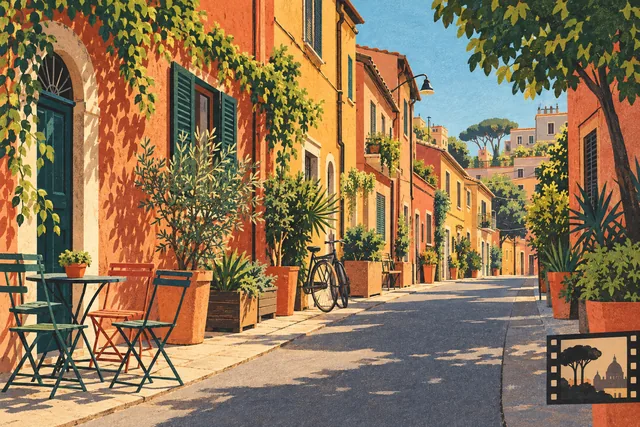
Begin with a modest aim: a walk, a seat and one or two things to notice. The municipal entrances include Via della Navicella and the area of Piazza dei Santi Giovanni e Paolo. Check which entrance works for your route on the day, especially if slopes or uneven ground affect your plans. A nearby point on a map is not always the easiest way into a historic park.
Allow yourself to turn back without completing an imagined circuit. A garden can provide relief from a busy sightseeing day precisely because it does not demand a fixed sequence of rooms. Look at the relationship between tree canopy, path and open space. Where is shade useful, and where does a clearing change the scale of what you see? These observations work even when you know little about garden history.
Expect a landscape that has changed
Rome’s heritage authority describes the park as what survives of the Mattei garden, developed from an earlier vineyard and transformed repeatedly. Its long history includes changes to planting, buildings and decoration. This is not a garden preserved exactly as a Renaissance owner left it. Try reading it as an arrangement with several periods, rather than assigning everything you see to one famous name.
Old descriptions can be particularly misleading here. Collections and decorative elements have moved or disappeared over time. If you have seen an engraving or a detailed historical account, use it to ask questions rather than as a promise of what will be standing beside today’s path. The gap between a historic image and the present landscape can itself become an interesting part of the visit.
A building in a park has its own rules
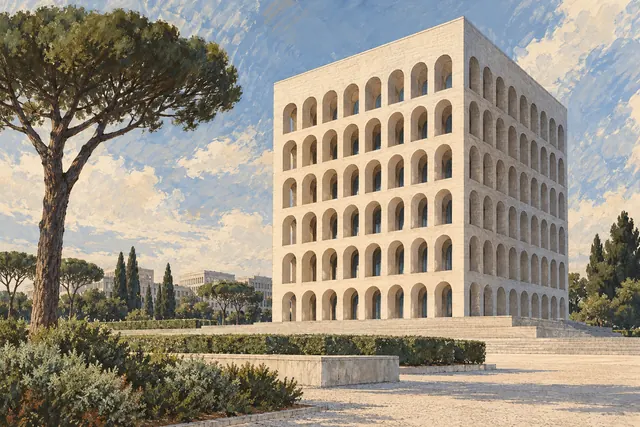
The Palazzina Mattei became the home of the Italian Geographical Society in 1926, while the park opened to the public in 1928. Those dates help explain the present combination of a public leisure space and an institution devoted to research and collections. They do not mean that the society’s rooms, library or holdings are included in an ordinary park walk.
If the institution is your particular interest, consult its own current programme and access arrangements separately. Do not enter a working doorway simply because a garden path reaches it. The same applies to an advertised talk or exhibition: check whether reservation, opening times or an entrance procedure differ from the park’s. A little precision preserves both your time and the institution’s working environment.
New archaeology is not automatically a visitor attraction
An August 2026 Ministry of Culture announcement reported an ancient building revealed during work in the Villa Celimontana area, with rooms and mosaic decoration. The announcement also made clear that its function remained under study. Possible interpretations are research questions, not settled labels that a visitor should repeat as fact.
More importantly for planning, a discovery announcement does not establish public access to the excavation. This garden guide makes no promise that you can enter or view the research area. If a future special opening is announced, use the responsible authority’s instructions for that specific event. You can be interested in the discovery without treating barriers or work areas as obstacles to get around.
Work with daylight and the weather
As checked on 28 October 2026, municipal guidance lists park opening from 07:00 until dusk, with ordinary garden entry free and separate arrangements possible for paid events. Follow current gate notices, weather closures and staff directions. In the shorter days of autumn, plan the park earlier than an evening monument stop; a daylight visit is also better suited to reading paths and uneven surfaces.
Our Villa Sciarra guide offers another layered garden, while Villa Ada and the Aventine walk suggest different kinds of outdoor time. Browse Rome neighbourhood experiences for a guided context. For the ancient setting nearby, use the specialist’s Celio walk. Let Villa Celimontana be a satisfying garden visit first; any separately confirmed institutional activity is an addition.
Sources & further reading
Turn a good read into a great day.
Find a highly rated Rome experience that brings these stories to life.
Explore related experiences →