Jewish Rome around the Portico d’Ottavia: history, memory and a living community
A walk around the Portico d’Ottavia should begin with a distinction: Jewish Rome is both a long history and a living community. The area is often presented through food or a picturesque route, but those are incomplete introductions. Give equal attention to institutions, memory and the people whose neighborhood this remains. A museum visit can provide a firmer starting point than a collection of stories overheard in the street.
Choose a manageable route near the Jewish Museum, the Portico and the surrounding public streets. Read a little before arriving, and leave room to change your pace. Some places invite photography; others invite quiet attention. Our history experiences can help locate guided interpretation, but check the guide’s actual focus and avoid assuming that a general city walk covers Jewish history in depth.
Let the community’s museum frame the visit
The Jewish Museum of Rome presents the community’s history and cultural heritage through its collection and visiting program. Use its own website for current access arrangements, including any synagogue component, security instructions and closures. A museum ticket or an advertised tour should be read according to its precise inclusions, rather than as blanket permission to enter every nearby religious space.
Inside, try following one object closely. Consider its material, purpose, inscription and place in communal life. A ceremonial textile or silver object is not merely attractive decoration; it belongs to a practice and a history. Read the label before assigning a meaning based on appearance. If a term is unfamiliar, asking a guide to explain it is more useful than carrying an uncertain interpretation into the rest of the walk.
Understand what the word ghetto refers to
The official account of Rione Sant’Angelo discusses the establishment of the ghetto in 1555. That history of imposed separation should not be softened into a romantic description of a quaint district. At the same time, the area’s present life cannot be reduced to the period of confinement. The task of a good visit is to keep historical restrictions and continuing community life in view together.
Language matters here. A “hidden gem” description can unintentionally make an inhabited place sound as though it exists only when tourists discover it. Speak about the neighborhood and its institutions directly. When discussing painful history with children, use clear age-appropriate explanations and allow questions, rather than turning commemorative places into dramatic scenery for a hurried walking-tour anecdote.
Read the Portico as evidence of another Rome
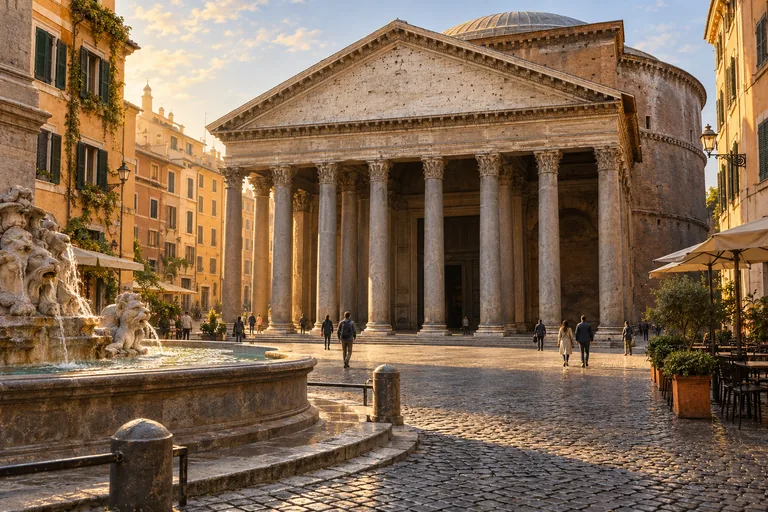
The municipal description of the Portico d’Ottavia explains its ancient rebuilding under Augustus and later restoration under Septimius Severus. The remains are therefore not a single untouched moment from antiquity. They help you see how a structure can be altered, reused and interpreted across different periods while the surrounding city continues to change around it.
Stand where the public route permits and distinguish what you can observe from what a reconstruction imagines. A column, inscription or change in level may invite questions, but it does not explain itself. A reliable guide can connect the visible fragments with documented phases. The nearby streets are also an opportunity to notice how archaeological remains coexist with modern doors, services and daily movement.
Give memorials a different pace
If you encounter commemorative plaques or memorials, stop long enough to read rather than photographing first and moving on. Names and dates refer to individual lives, not simply to a historical theme. Keep group conversation considerate and do not use a memorial as a convenient seat, meeting backdrop or place to arrange food photographs. These small choices make a tangible difference to how a shared space is treated.
Avoid improvising detailed historical claims from incomplete recollection. If a plaque raises a question, note it and consult the museum’s resources afterwards. The city contains more history than any single walk can responsibly explain. Acknowledging a question is a better response than filling the gap with a confident but inaccurate story, especially when discussing persecution and loss.
Make food part of a broader visit
A meal can provide another connection with the neighborhood, but cuisine should not replace its history. Our Roman food guide beyond pasta treats ingredients and ordering as practical questions. Ask a restaurant directly about its menu and any dietary or religious requirements that matter to you; a traditional dish name does not by itself establish a kitchen’s certification or preparation practices.
From here, Piazza Navona or a Trastevere morning walk can offer a different chapter of the city. Choose a continuation that leaves time for reflection rather than rushing immediately to another major attraction. The strongest memory of this neighborhood may be a particular object, a carefully read inscription or a better question about how Rome’s many communities have shaped its life.
Sources & further reading
Turn a good read into a great day.
Find a highly rated Rome experience that brings these stories to life.
Explore related experiences →