Trastevere beyond dinner: a morning walk with art and everyday life
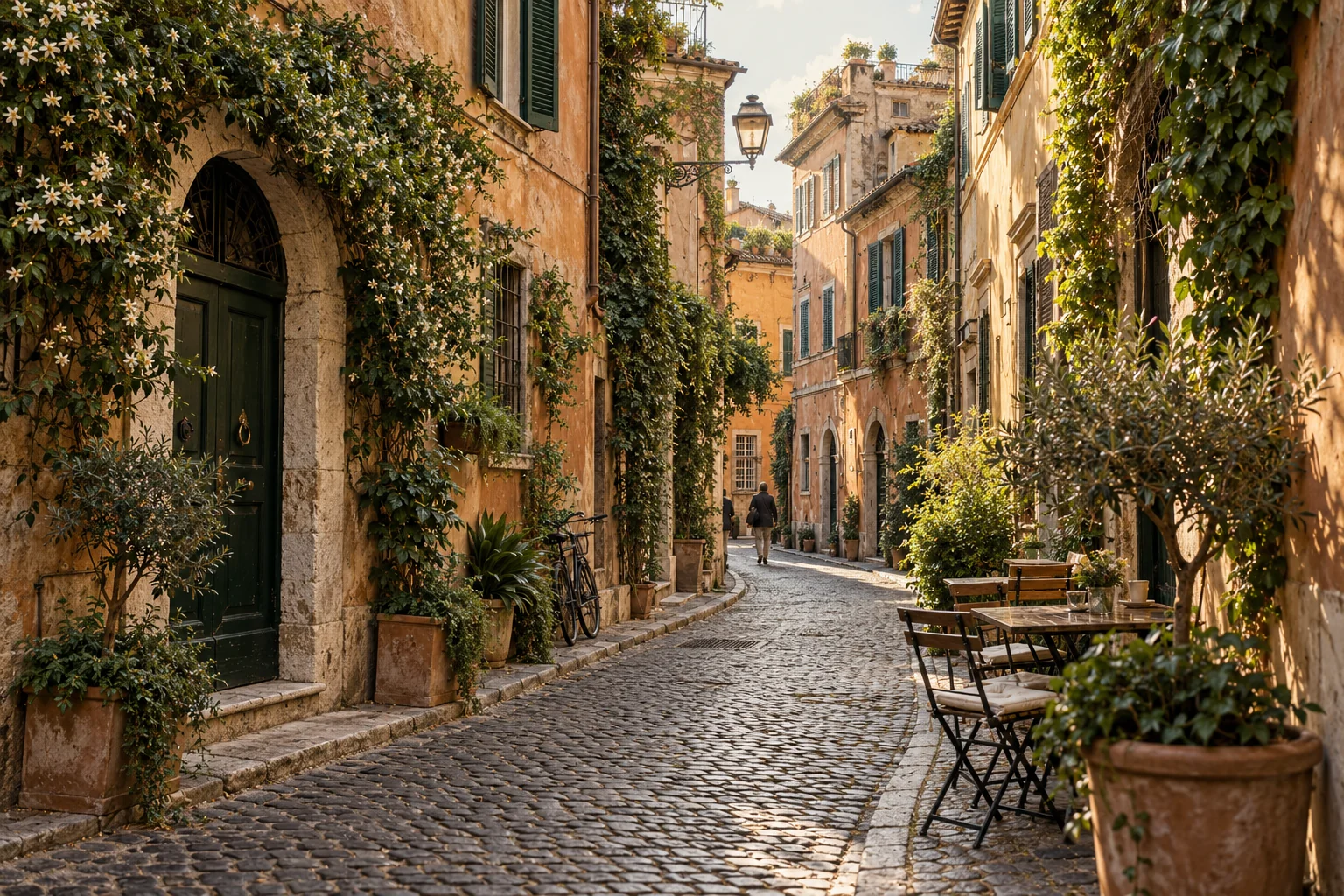
Trastevere does not begin when the dinner tables fill. A morning visit reveals a different rhythm: deliveries, errands, church visits and the slow work of opening a business for the day. You can enjoy its narrow streets while remembering that they connect homes and workplaces. For a first walk, use Santa Maria in Trastevere as an orientation point and choose one additional interior rather than attempting every nearby attraction.
Morning does not guarantee empty streets, and “quiet” is never a reservation you can purchase. The useful advantage is a change of purpose. Instead of searching for the liveliest restaurant, you can look at materials, buildings and art. Our walking-tour collection helps if you would like guided context; the following approach also works independently with a map and a little curiosity.
Begin by understanding the square
At Piazza di Santa Maria in Trastevere, take a moment outside before entering the basilica. Notice how the church, fountain and surrounding buildings organize the space. Where can people gather without blocking movement? How does the square differ from a long street? These observations give you something concrete to discuss without requiring a lecture on every building or an argument about which part is oldest.
Treat any service or gathering as a reason to adapt your plan. Churches are not museum rooms with predictable visitor behavior throughout the day. If sightseeing would intrude on worship, return later or continue the walk. Clothing, voices and photography should follow the current rules and the activity taking place. A considerate pause outside is more valuable than an interior visit made at the wrong moment.
Look at the basilica in layers
The municipal account of Santa Maria in Trastevere identifies substantial twelfth-century fabric and later artistic contributions, including Pietro Cavallini’s mosaics of the life of the Virgin. Rather than memorizing all the dates, choose a relationship to study: images against architecture, reused columns against newer decoration, or the contrast between the outside façade and the interior’s visual richness.
A helpful exercise is to look first without reading, then consult a short description and look again. The second view usually reveals a detail that was present all along. Do not mistake this personal discovery for an original historical interpretation; it is simply a satisfying way to learn. Allow others access to the same view instead of remaining indefinitely at one narrow stopping point.
Add a museum about the city’s people
The Museum of Roma in Trastevere offers a useful change from monumental church art. Its institutional history and collections connect with representations of Roman life and popular traditions. Check the current exhibitions before you go: temporary displays may shape the visit considerably. The museum can help turn an attractive neighborhood into a question about how a city remembers and represents its inhabitants.
Look at a depicted street scene and ask what the artist selected. Which activities appear important, whose viewpoint is offered, and what has been omitted? An image of ordinary life is still a constructed image. This approach works particularly well with older children, who often enjoy noticing a small practical detail more than being asked to admire a painting because it is historically significant.
Make the walk small enough to enjoy
After the museum, choose a few nearby streets and a place for a drink or lunch. Do not follow every appealing turn if doing so makes the return difficult for someone in your group. Uneven surfaces, narrow pavements and parked vehicles can interrupt a route that looks straightforward on a screen. If access matters, confirm the specific entrance and path rather than relying on a neighborhood-wide description.
The official district guide shows how many cultural places share this part of Rome. That abundance is a reason to choose, not an obligation to hurry. Galleria Corsini is a possible art-focused alternative; visit it instead of the smaller museum if its collection interests you more. Combining both can work, but leave enough attention for the second rather than treating it as an afterthought.
Cross the river only with a clear next idea
A route toward Jewish Rome around the Portico d’Ottavia offers a different historical conversation, while our Tiber evening guide can save the river for later. Avoid making every pleasant morning expand automatically into a full-day march. Decide where lunch ends the outing, then let the afternoon remain a separate choice with its own distance and energy requirements.
Trastevere is most rewarding when you allow it to be more than an atmosphere. Its churches, cultural institutions, public spaces and daily routines invite different kinds of attention. You may remember a mosaic, a painted street scene or the shape of a small square. Dinner can still be excellent later, but by then you will have met another version of the neighborhood as well.
Sources & further reading
Turn a good read into a great day.
Find a highly rated Rome experience that brings these stories to life.
Explore related experiences →