How do Rome’s seasonal vegetables change a restaurant menu?
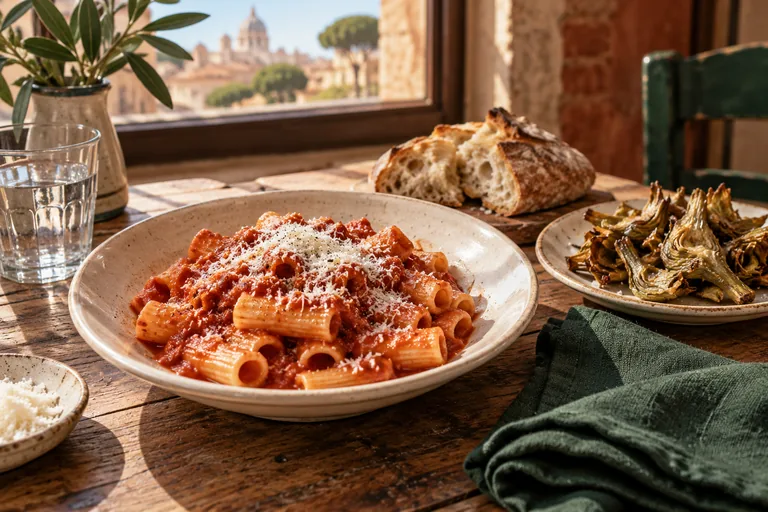
Roman food is often introduced through a quartet of famous pasta dishes. Vegetables give you another, more changeable way into the city’s cooking. A menu may offer a spring mixture one month and a crisp bitter salad at another time; the same ingredient can arrive raw, braised or fried. Paying attention to those choices makes a meal feel connected to the season without turning dinner into an examination of the waiter.
Start with curiosity rather than a rigid calendar. Weather, sourcing and restaurant style affect what is available, and a printed menu may combine seasonal dishes with year-round favourites. Ask what the kitchen is particularly enjoying preparing that day. Our guide to eating beyond pasta in Rome is a useful companion if you would like vegetables to help shape the meal instead of appearing as an afterthought.
Spring can arrive as a mixture
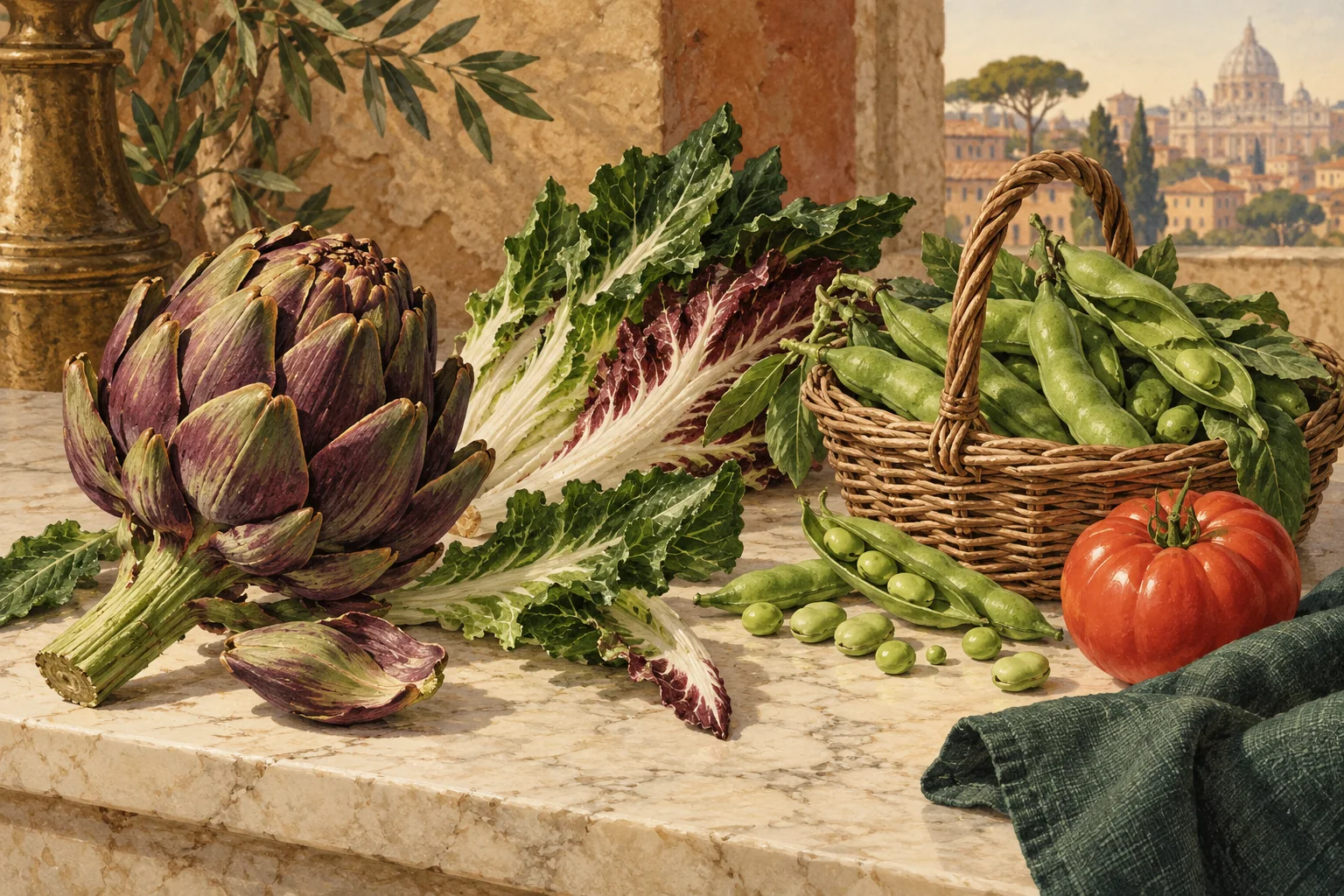
Vignarola is a helpful example because its identity depends on vegetables meeting in a pot. Turismo Roma describes it as a spring dish associated with artichokes, broad beans, peas, romaine lettuce and spring onion. Its account also notes that versions can include guanciale or pancetta. The practical lesson is simple: a dish full of vegetables is not automatically vegetarian, and the name alone does not settle the ingredient list.
When you encounter vignarola, ask how that kitchen serves it. Is it a starter, a side, part of another plate or a substantial dish in its own right? That question helps you order a balanced meal and avoids assuming that the portion will match a photograph seen elsewhere. Notice the contrast between tender leaves and firmer beans, and how the cooking brings different ingredients together. You do not need to decide which family’s recipe is the definitive one.
Bitter greens deserve their own question
Puntarelle offer a different kind of interest. The city’s official food article identifies them as shoots of catalogna chicory and places them among Rome’s familiar festive accompaniments. Their appeal is in texture as well as flavour. On a menu, look beyond the word itself to the preparation and dressing, and ask about ingredients if fish, garlic or another component matters to you.
Do not use appearance as your only guide. A pale, neatly cut vegetable can still taste assertive, and a green side dish may be cooked very differently from the salad you expected. If you enjoy bitterness, say so. If you are uncertain, ask the server to describe the dish rather than requesting the “most authentic” option, a phrase that can hide the very practical information you actually need.
A familiar ingredient can carry a seasonal ritual
Broad beans provide an example of food appearing in a social calendar as well as on a restaurant menu. Turismo Roma connects fresh broad beans and pecorino with May Day. You do not need to reproduce a festival meal to find that interesting. It is a reminder that the significance of an ingredient may come from when and with whom it is eaten, not simply from an elaborate recipe.
This is also a reason to resist a universal month-by-month promise. A dish associated with spring does not guarantee availability on every spring date, and finding it outside the season does not tell you everything about its sourcing. A short, friendly question gets closer to the answer than judging a menu from the pavement. Ask whether the vegetables are fresh seasonal produce and how they are prepared that day.
Use the contorni section to build a better meal
Read the side dishes before ordering the main course. You may find that a vegetable adds exactly the freshness, bitterness or softness missing from the rest of your choices. Ask whether a main already includes an accompaniment and whether a side is intended to be shared. This avoids both accidental over-ordering and the disappointment of expecting a complete plate when you have ordered only one component.
Check dietary requirements directly with the restaurant, including stocks, dressings and frying arrangements where relevant. An ingredient’s plant origin does not describe everything that happens in the kitchen. Be specific about what you need rather than relying on a broad label. Our Testaccio neighborhood article adds useful context for thinking about food alongside the working life of a district, while a morning in Trastevere keeps the day from revolving entirely around the next reservation.
Let a market or guided tasting add context
A market visit can make restaurant vocabulary less abstract: you can see the shape and condition of ingredients before encountering them on a plate. Treat stalls as workplaces, ask before close photographs and avoid handling produce unless invited. If Florence is also on your itinerary, compare its two different market experiences instead of expecting every Italian market to work identically.
For a structured introduction, browse Rome’s food experiences and read the actual inclusions. A tasting tour, market walk and cooking class answer different questions, and none should be assumed to feature a particular seasonal vegetable. A good meal can begin with one modest question: what looks especially good in the kitchen today?
Sources & further reading
Turn a good read into a great day.
Find a highly rated Rome experience that brings these stories to life.
Explore related experiences →