Which small municipal museums suit a low-cost Rome afternoon?
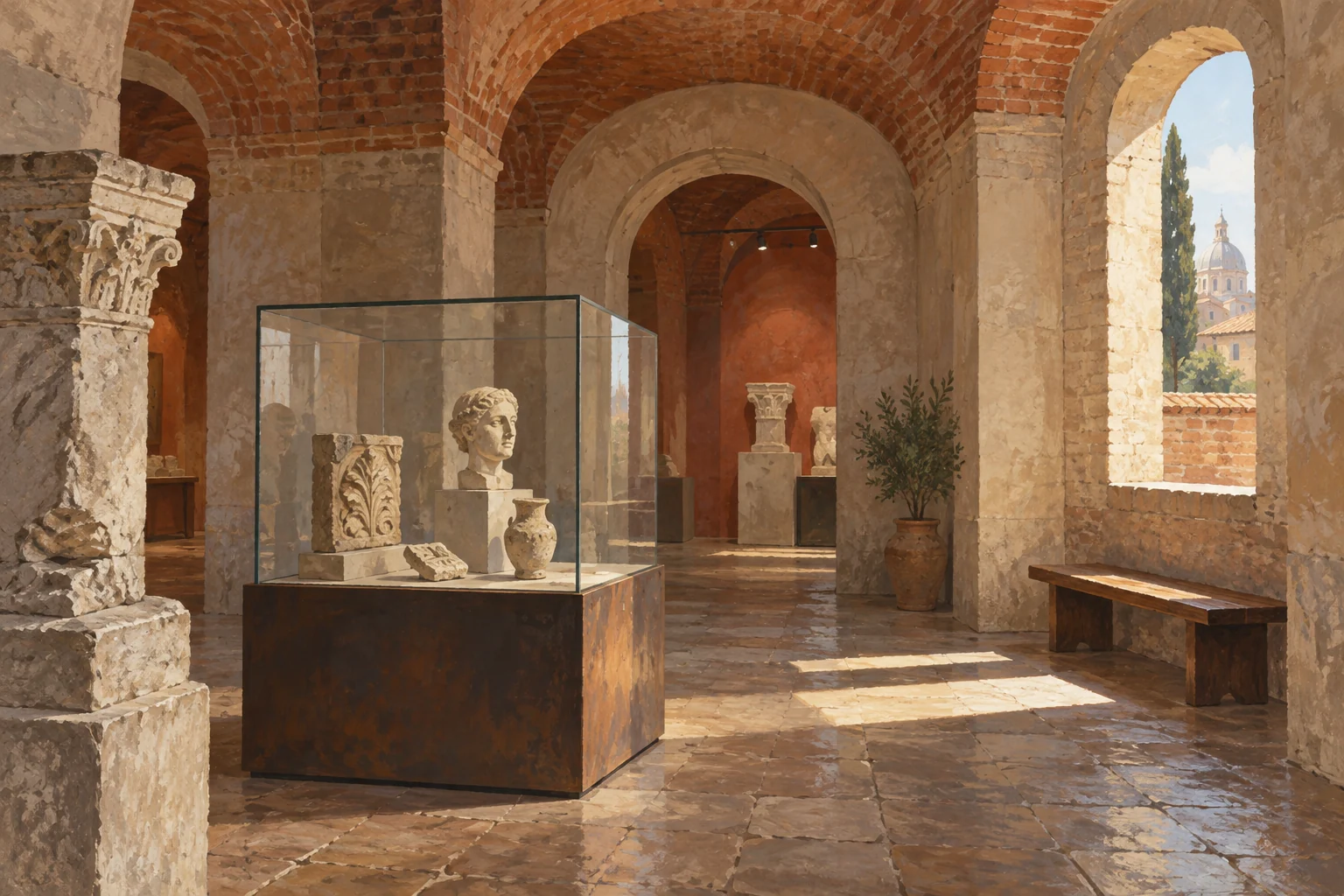
A small municipal museum can give a Rome afternoon a clear subject without demanding the stamina of a major collection. For a low-cost plan, begin with two questions: what would you like to understand, and what does admission actually cost for your circumstances? Old lists of “free museums in Rome” are no longer a reliable substitute for current visitor information. Resident concessions and free admission for every visitor are different things.
As checked on 6 October 2026, Rome’s official free-admission guide identifies the Museo delle Mura, Museo della Repubblica Romana e della Memoria Garibaldina, Museo di Casal de’ Pazzi and Casa Museo Alberto Moravia as free for non-residents too. That does not mean all four suit the same afternoon, or that you can arrive without checking reservations and opening arrangements.
Choose the Museo delle Mura for a building-centered question
The Museo delle Mura offers a way to make the idea of a city boundary tangible. Instead of trying to follow the entire history of Rome, give yourself one question about a gate, wall or passage. How does an opening allow movement while also controlling it? This is a manageable subject for travelers who like architecture more than long galleries of paintings.
The museum’s current admission page confirms free entry but also describes controlled capacity and a free ticket collected on site. It specifically says the tower terrace is not accessible. Check its notices before setting out; do not base the visit on an old photograph promising a particular view. Groups have their own booking arrangements.
For a wider ancient-landscape day, the Colosseum specialist’s Appian Way planning guide can help you decide whether a further excursion fits. Keep that optional. A free museum is not good value if the route afterward leaves everyone exhausted.
Choose the Roman Republic museum for a different century
The city’s description of the Museum of the Roman Republic locates it in Porta San Pancrazio and explains its focus on the 1849 republic. Historical objects, images and interpretive displays introduce a period far removed from emperors and amphitheatres. It is a useful choice when a Rome trip has become almost entirely ancient, and you want a different political and urban story.
Before entering, ask everyone to name what they already know about nineteenth-century Italy. “Very little” is a perfectly useful starting point. In the museum, follow the sequence of events before attempting to memorize every participant. Pick one image or object whose role you can explain afterward. That produces a more durable understanding than collecting a string of unfamiliar names.
Consider the journey and terrain separately from the museum’s size. Our Trastevere introduction offers another neighborhood focus, but it is not a guarantee of an effortless connection to the higher ground around Porta San Pancrazio. Check the actual route and the needs of your travelers.
Do not mistake “small” for “free”
The Museo Barracco’s current ticket page places it among paid museums and distinguishes free admission for eligible residents from ordinary visitor admission. It also lists conditions for other concessions. A compact collection may still be a worthwhile purchase, but the decision should begin with the current tariff rather than a remembered recommendation from an older travel article.
Compare the total outing, not just the museum line in a budget. A convenient paid collection may require less transport and fit your interests better than a free venue far from the rest of your day. The money saved on entry does not automatically justify a rushed journey across the city. Our transport planning guide helps make those connections explicit.
Build an afternoon that has an easy stopping point
Choose one museum, a comfortable break and a simple return. Before committing, check opening days, reservation rules, accessibility information and any current closure notice on the venue’s own website. A listing in a free-entry guide establishes a category, not guaranteed space at your preferred time. Keep a nearby public-space alternative that does not depend on another tightly timed ticket.
If the group prefers painting to museum interpretation panels, our guide to art in Rome’s churches provides a different framework with its own access checks. Browse budget experiences when paid explanation would add value, comparing actual inclusions. The aim is a satisfying afternoon at a deliberate cost, not the largest possible number of zero-price entrances.
Sources & further reading
Turn a good read into a great day.
Find a highly rated Rome experience that brings these stories to life.
Explore related experiences →