Villa Farnesina in Rome: how should you look at art within a room?

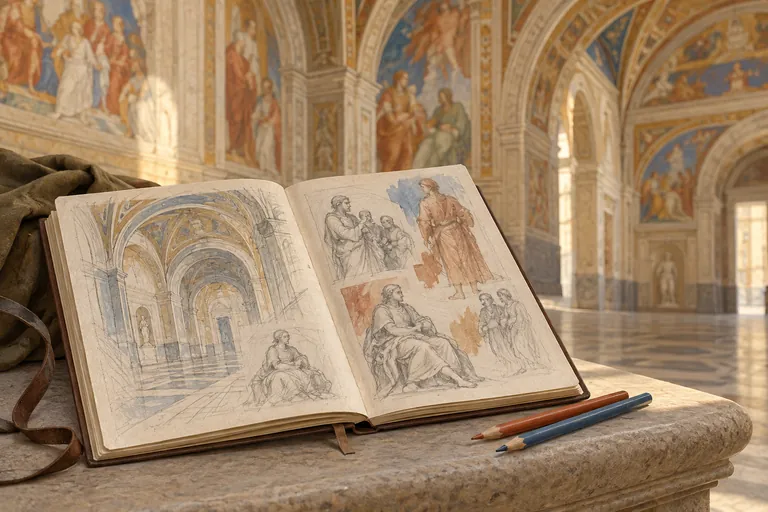
Villa Farnesina is most rewarding when you look at the room as well as the painting. Its decoration belongs to a residence designed to make architecture, gardens and images work together. Instead of treating the visit as a hunt for one famous name, give yourself permission to notice where a scene sits, how it meets the surrounding ornament, and what changes when you move across the space.
This approach suits travelers who enjoy art but do not want a day dominated by an enormous collection. It also provides a natural anchor for a Trastevere walk with art and everyday life. Book or confirm the villa first, then let the neighborhood part remain flexible. A substantial painting deserves more attention than the gap between two unrelated appointments.
Know the patron before counting the painters
The villa’s official introduction identifies the banker and patron Agostino Chigi as the owner for whom the early sixteenth-century residence was built. It names Raphael, Sebastiano del Piombo, Sodoma and Baldassarre Peruzzi among the artists involved. The useful point is collaboration: a wealthy patron’s residence brought several artists and different kinds of visual skill into one setting.
Ask what a decorated home communicates about its owner. Taste, learning and social ambition can all be part of the answer, although a specific claim about a particular image still needs supporting evidence. Imagine arriving as a guest rather than walking into a modern gallery. What would you notice first? What could you understand without a guide explaining every figure? That change of viewpoint makes the relationship between hospitality and display easier to consider.
Start with the boundaries of the room
Before settling on a painted scene, find the actual doors, windows and structural edges. Then look for painted forms that echo, extend or play with those boundaries. You do not need specialist terminology to notice that an image can make a surface feel open, enclosed, orderly or surprising. Say what you see in plain language first; the label can supply names and techniques afterward.
Our discussion of Raphael’s rooms at the Vatican offers a useful comparison in looking at decoration within architecture. The settings and commissions differ, so carry the questions across rather than assuming the same answers. In both places, an isolated reproduction is only part of the experience: the real room adds scale, position and a sequence of views.
Choose one scene and return to it
Pick a scene that draws your attention and spend a little time identifying its main relationships. Where are the figures looking? What directs your eye through the composition? Which colors repeat? After reading the official explanation, look again. Often the most satisfying moment is recognizing something you initially overlooked, rather than successfully naming a mythological character on the first attempt.
For companions with different levels of art knowledge, agree on one shared question. Each person can point out a detail, then explain why it mattered to them. This avoids making one visitor the lecturer and everyone else the audience. With children, a shape or color challenge may work better than a long story. Keep voices low and leave room for other people to approach the same work.
The building’s name has a later chapter
The Accademia Nazionale dei Lincei’s history explains that the property was later acquired by Cardinal Alessandro Farnese, giving rise to the name Farnesina and distinguishing it from Palazzo Farnese across the river. This is a helpful reminder that the name on a visitor map may belong to a different period from the commission that produced the art you came to see.
Keep those layers in your notes: original patron, artists, later owners and present institution. You need only a few words for each. If you enjoy that kind of comparison, our guide to Palazzo Barberini and Galleria Corsini can help you choose a different art afternoon. There is no need to squeeze every related palace into the same day.
Check the visit, then leave room around it
Consult Villa Farnesina’s current visitor information for the date you intend to go, including opening arrangements, available tours and any access requirements. A residence is not automatically easy to navigate for every visitor, and a general description of the collection does not guarantee every room is available. Ask about the specific route if stairs, standing or visual access affect your plans.
Browse Rome’s art experiences if you would value a guide, checking that the villa is actually named in the itinerary. Afterward, choose a meal, a gentle walk or a seated pause. Let one painted detail stay with you. The pleasure of a focused visit is that you leave with something distinct to remember, rather than a blur of beautiful ceilings.
Sources & further reading
Turn a good read into a great day.
Find a highly rated Rome experience that brings these stories to life.
Explore related experiences →