Why visit the plaster casts at Rome’s Museo dell’Arte Classica?

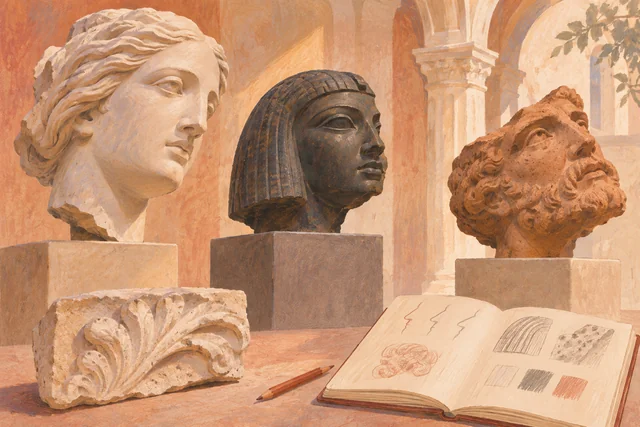
In most museums, finding the word “cast” on a label feels like a cue to look elsewhere for the famous original. At Sapienza University of Rome, it is the reason for the visit. The Museo dell’Arte Classica brings together plaster versions of sculpture held in collections far apart. A student can compare the stance of two figures without an international train ticket. So can you. Come with one question about bodies or buildings and the white plaster starts to work like a particularly generous teacher.
Find the teaching collection
The museum is on the university campus at Piazzale Aldo Moro 5, at the rear of the Faculty of Arts and Humanities building. That campus address is the beginning of the last leg on foot. Save the name of the faculty and the museum as well as the street number. The faculty and the university museum network both list weekday opening, but give different daily hours. If your plan depends on an early start, a late arrival or a particular gallery, contact the museum ahead of time. Sapienza’s museum contacts and location.
The collection grew out of Emanuel Löwy’s work after his appointment at Rome in 1889–90. It began in Testaccio and later moved to the university campus, where casts were arranged in a broadly chronological sequence in 1935. The faculty counts more than 1,200 casts. That history explains something immediate about the visit. Each object had to make sense beside others as a tool for learning, even when the sculptures that supplied their forms had never occupied a room together. The faculty’s history and collection outline.
Look for the leg that carries the weight
Try a small experiment in front of a standing figure. With your eyes, draw a line down from the base of its neck. Does that line reach the ground between the feet or over one of them? Look again at the knees and the slope of the hips. Now find a figure whose weight seems distributed differently. Your own body can help you read the adjustment. Shift your weight onto one foot and notice what happens to the opposite shoulder.
A teaching collection gives that kind of comparison room to breathe. Sapienza lists the monumental kouros of Samos among its casts and devotes several rooms to archaic sculpture. A kouros is a standing male youth. Look at how much movement a sculptor can suggest by advancing one foot while keeping the body firmly organized around a central axis. If you want to extend the exercise in another collection, try our Museo Barracco guide to comparing sculpture and bring the same question to a different material.
Ask which object a cast reproduces
The date on a label can refer to an ancient Greek work, the later Roman version through which a design is known, or a modern cast or reconstruction. Read the nouns around the dates before writing one down. A plaster object can preserve information about the condition and interpretation of a sculpture when the mold was made. It does not reproduce the sheen of polished marble, the color of a bronze surface or the changing light in the place where an ancient figure once stood.
The faculty describes casts of sculptures from the Aphaia temple on Aegina that include restorations by the sculptor Thorvaldsen. That detail makes a good puzzle. When you look at a completed pose, which parts reflect surviving ancient stone and which record a later judgment about the action? A label or collection diagram may answer more than an attentive inspection of the surface. Our guide to the sculptor Pietro Canonica’s studio offers another way to think about the stages between a design and a finished sculpture.
Move from a figure to a building
The museum also describes casts of three caryatids from the Erechtheion in Athens. A caryatid takes human form while doing the visual work of an architectural support. Consider the gap above the head, the vertical fall of the drapery and how the figure seems to carry what is overhead. Then mentally remove the architecture. What might look like a static posture in a sculpture gallery begins to look remarkably sensible as part of a building.
After the campus visit, a daytime walk in neighboring San Lorenzo gives you a nearby change of scene. If comparing this independent visit with a guided art experience, consult our Rome art collection for the named venue and subject. Save a few lines in your notes for the work you would most like to see in its home museum. A detail you first recognized in plaster can give that future visit a sharper starting point.
Sources & further reading
Turn a good read into a great day.
Find a highly rated Rome experience that brings these stories to life.
Explore related experiences →