Rome’s Galleria Nazionale: how should you approach modern art?

Rome’s Galleria Nazionale gives a city visit a different set of questions. After days of emperors, churches and palace collections, you can spend time with artists exploring modern experience and changing ways of making art. You do not need a ready-made opinion about every work. A useful visit starts with curiosity about what an object does to your attention.
Give the museum its own purpose in your itinerary. It is not simply a spare indoor activity after everything famous has been seen. Our guide to four varied days in Rome is a helpful starting point for making room for different periods. A modern-art afternoon can change the pace of a trip as much as a change of neighborhood.
Understand the museum’s starting point
The gallery’s official history dates its establishment to 1883, when it was intended to represent the art of the newly unified Italian state. Its first home was Palazzo delle Esposizioni. The institution later moved to the Valle Giulia building designed by Cesare Bazzani, associated with the 1911 international exhibition. That background makes the museum itself part of modern Rome’s story.
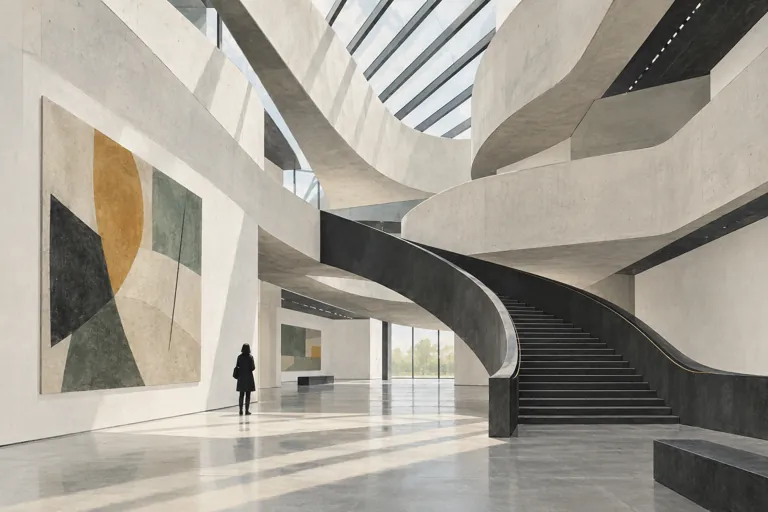
Before entering, notice how the architecture presents the idea of an art museum. What does the approach ask visitors to do: climb, pause, look upward, pass through a formal threshold? You need not reduce the building to a single message. Treat its scale and arrangement as a first object of attention, then see whether the experience inside supports or complicates your initial impression.
Choose a question instead of a checklist
Try entering with one question you can ask of several works. How does a surface suggest movement? What changes when a figure is larger than life? Can an arrangement of shapes make you feel enclosed or expansive? A repeatable question creates a thread through unfamiliar material without requiring you to know every movement’s name in advance.
Begin by looking for a short time before reading the label, then read it and look again. The second encounter may reveal a date, material or context that alters the first. This is not a contest between instinct and information; both contribute. If a work leaves you unmoved, move on politely. You do not have to force a profound response to prove the visit was worthwhile.
Pay attention to what art is made from
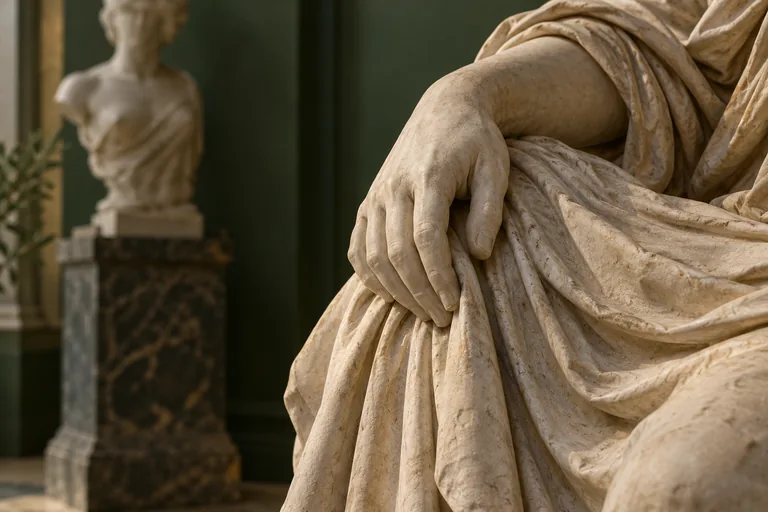
The gallery’s conservation laboratory describes collections involving traditional painting, sculpture, photography, design and works using unconventional or multiple materials. That variety encourages a practical question: how is the thing in front of you physically made? A smooth surface, a visible join or a change in reflectivity can be a useful beginning.
Read the material description carefully rather than guessing from appearance alone. A surface may imitate another substance, and a photograph can make scale difficult to judge beforehand. If you are visiting with children, invite each person to choose a texture or shape they would describe differently after close looking. Keep hands off the works, even when a material seems ordinary or sturdy.
Check what is on view now
Use the museum’s official website to check opening arrangements, tickets, accessibility and exhibitions for your actual date. Look at the dates of an exhibition rather than relying on a prominent image or an old article. Works may move, and a museum’s collection is larger than any one display. If a particular piece is the reason for the trip, ask whether it is currently accessible.
Keep the Galleria Nazionale separate from other museums when comparing bookings. Our introduction to MAXXI explains another distinct art-and-architecture visit, while Galleria Borghese has a different collection and reservation context. Similar words in museum names do not mean the same admission or visitor experience.
Let the museum lead into a slower afternoon
Allow some time after the visit to talk about one work rather than immediately rushing toward another collection. If your route includes the nearby park, our Villa Borghese planning guide helps you think about a less tightly scheduled day. Check distances and the suitable entrance for your group; a green area on a map can still involve a substantial walk.
Browse Rome arts and events for a cultural activity that fits your date and interests. On a wider journey, Milan Tour Hub offers another city in which to explore art and design. Your Rome visit need not settle what modern art means. Leaving with one work you want to remember and one new question is already a strong result.
Sources & further reading
Turn a good read into a great day.
Find a highly rated Rome experience that brings these stories to life.
Explore related experiences →