How does water tell the time on Rome’s Pincio?

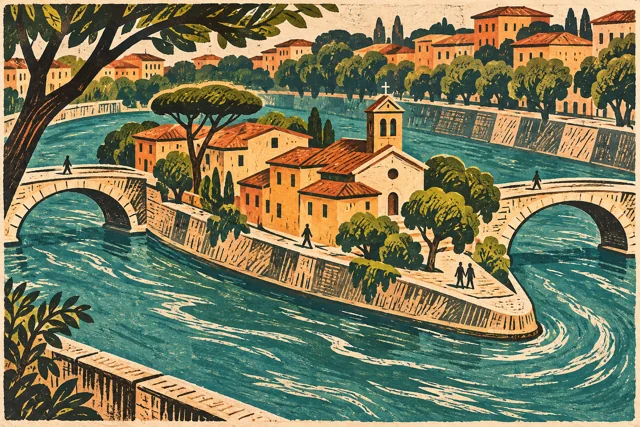
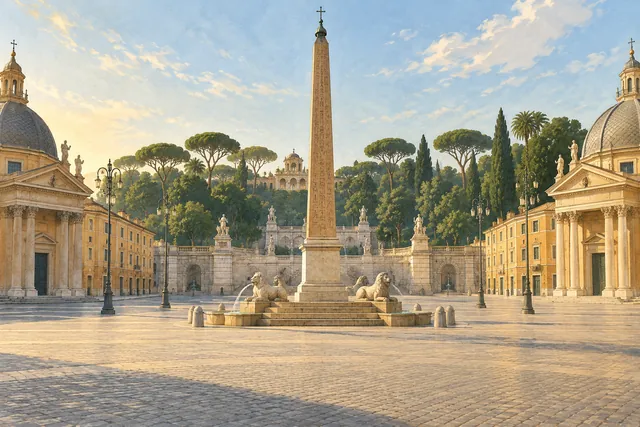
On the Pincio above Piazza del Popolo, a small clock tower stands on an island in a garden pond. The water is part of the view, but it also explains why the clock is here. In the nineteenth century, a Dominican friar named Giovanni Battista Embriaco designed a mechanism that put flowing water to work. The place to begin is the edge of the pond. From there, the clock looks in turn like an ornament, a piece of engineering and something built for the pleasure of people out on a walk.
Find the instrument, not just the panorama
On a first visit to the hill it is easy to reach the terrace, enjoy the panorama and miss the clock. Look for the garden paths by Viale dell’Orologio, away from the outer edge of the viewpoint. The municipal heritage authority lists the approaches to the Passeggiata del Pincio. Work out which approach fits your day. A walk up from Piazza del Popolo includes a climb, while someone already visiting the Villa Borghese gardens may prefer to approach across the higher ground.
Give the pond a circuit wherever the paths are open. The island makes a small machine visible from several sides and keeps the public at a distance from its moving parts. The iron housing was designed to suggest branches and trunks. It is easy to miss the intention if you have already classified everything near the water as garden furniture. Seek out the edges of the glazing and the clock faces. Someone designed a garden shelter through which a passerby could look at a machine.
What exactly does the water do?
An ancient water clock might measure an interval by the changing water level in a vessel. Embriaco’s clock has a pendulum and hands. The water supplies power, and the regulating mechanism turns that supply into a repeated, even motion. Imagine holding your open hands out like the pans of a balance. Add a little weight to one, then the other. A steady arrival can be converted into a series of movements from side to side. That is a useful starting point for thinking about the clock.
The actual mechanism is more elaborate. The Biblioteca Casanatense describes a divided vessel, springs working with a regulating pendulum, and water falling alternately onto two bronze forms shaped like lilies. An arm transmits motion to the clockwork serving four dials. Another receptacle fills to operate the striking mechanism, then empties and rises for the next cycle. The person reading the time needs none of this information. The person trying to understand the machine can follow the water as it does successive jobs. The library’s account of the hydraulic clock.
Why put a clock on a garden island?
Roma Capitale dates Embriaco’s design to 1867 and the installation in the gardens to 1873. It credits municipal architect Gioacchino Ersoch with the setting. One person supplied the invention, another the arrangement in which the public encountered it. That division of labor helps explain why the most interesting view need not be the one giving the clearest reading of the time. From a slight distance you see how an instrument intended for precision acquired a picturesque home. Roma Capitale’s history of its public clocks.
For a different relationship between science and a public building, consider the meridian at Santa Maria degli Angeli. There, the position of a ray of sunlight has meaning in relation to a line on the floor. At the Pincio a flow of water helps keep a mechanical system in motion. A sunny interval matters to one, a reliable water supply to the other. Keeping the two explanations separate makes both inventions more interesting.
Let the walk work even if the mechanism is still
Maintenance, reflections and the viewing distance can all affect what a visitor sees. No need to assemble the family around the pond on the promise of a particular chime. Give one person the task of spotting a dial and another the task of finding where the surrounding design imitates living wood. For children, asking where a clockmaker might put the glass so people could watch the mechanism often starts a better conversation than asking them for the time.
Our Villa Borghese family guide can help you choose a second stop and leave room for a break. If a guided outing appeals, check the meeting point and listed stops in the short-visit collection. On the way back to the terrace, try describing the clock without referring to its hands. The pond, alternating weights and branch-like case are likely to be the details that stay with you long after you forget what time it was.
Sources & further reading
Turn a good read into a great day.
Find a highly rated Rome experience that brings these stories to life.
Explore related experiences →