Frascati from Rome: what belongs to a town day trip?

Frascati works well as a question about scale. How much do you want to fit into a day outside Rome: a town walk and lunch, a museum, a villa visit, or a trip into the surrounding countryside? Those are related possibilities, but they are not interchangeable. Start by choosing the town itself as your destination. A clear, modest plan gives you room to notice its streets and hill setting without treating every attractive gate as an invitation to enter.
Keep Frascati distinct from the wider Castelli Romani
The official Castelli Romani tourism guide places Frascati among the Alban Hills and highlights its Tuscolan villas, churches, food and wine. It also makes a crucial distinction: some villas can be visited, while others are hotels or private residences. A view of a grand facade is therefore a different experience from a booked interior or garden visit. The town is not a single open-air estate with one set of admission rules.
Use that distinction when drawing your route. Mark the station, one confirmed cultural stop, somewhere to eat and the route back. Treat an excursion farther into the hills as an additional journey with its own transport and access checks. A day-trip listing that mentions Frascati does not automatically include a vineyard, and a wine tasting does not necessarily take place in the town centre. Our Rome day-trip collection lets you compare described itineraries; read meeting points and inclusions before deciding which kind of day you want.
Let the museum give the landscape some depth
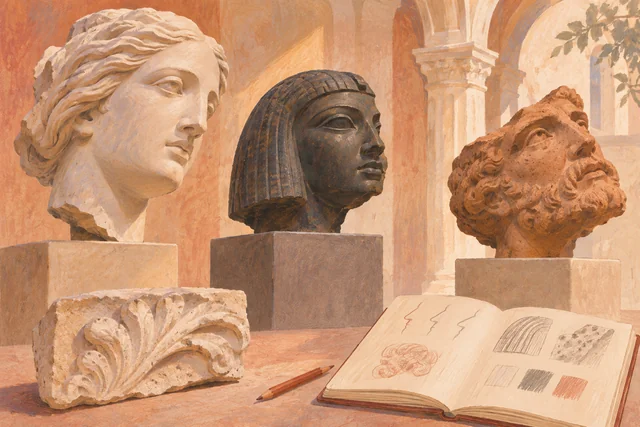
The Scuderie Aldobrandini provide a focused cultural anchor. According to the official visitor description, the seventeenth-century building was adapted by Massimiliano Fuksas as an exhibition space while retaining visible historic fabric. Its archaeological collection includes inscriptions, urns, sculpture and reliefs, and a historical section uses scale models of Tuscolan villas. An auditorium hosts a separate programme of performances and events. A museum admission should not be read as a concert ticket.
The villa models suggest a particularly useful exercise. Notice how a large residence organises approach, building and open space; then ask which of those relationships you can actually observe outside. A model offers an overview that a pedestrian may never get, but it does not establish today’s access. Our guide to Casino Nobile at Villa Torlonia asks how rooms express social ambition. In Frascati, you can extend that question to the arrangement of a larger estate, while keeping the evidence of model and surviving place distinct.
Check the museum’s current opening notice before travelling. The regional tourism page lists Monday closure at the time of our 2 November 2026 review. If the collection is your principal reason for coming, confirm its hours directly and choose your travel day around that confirmation. An attractive train fare is not much help if it delivers you to a locked cultural stop.
Give lunch its own place in the day
It is possible to enjoy a food-focused afternoon without turning it into a checklist of supposed essentials. Choose a meal that suits your appetite and budget, check the menu and ask how dishes or tastings are priced. If wine is part of the plan, arrange the return journey before ordering. If it is not, the town does not become a lesser destination. A slow lunch can simply be a pause between looking at buildings and looking at the landscape.
Keep claims about production separate from what is on your table. A glass served in town is not proof that you have visited its producer. A cellar visit should name the location, meeting arrangements and what is included; transport may need its own booking. These are useful questions across Italy, as our sister publication’s guide to visiting working artisan spaces explains. Confirmation matters more than an evocative word in a tour title.
Plan the return before the outward journey
Frascati has a rail connection with Roma Termini, noted by the official tourism guide. Check the operator’s actual timetable for your date, including engineering changes, the last suitable return and the time you need to reach your Rome accommodation. Do not build the day around a generic journey-time estimate. Allow for the walk between station and town, changes in level, rests and your own pace rather than assuming everyone moves at the same speed.
Back in Rome, keep the evening flexible. Pairing this excursion with a demanding timed booking can remove the very breathing space that made the day trip appealing. If your group decides that leaving the city is too much, Villa Doria Pamphilj offers a different kind of outdoor day, while Palazzo Massimo provides a city-based archaeological alternative. Neither replaces Frascati; each answers a different wish. The useful decision is to name that wish first, then build a day whose travel, access and energy demands actually fit it.
Sources & further reading
Turn a good read into a great day.
Find a highly rated Rome experience that brings these stories to life.
Explore related experiences →