Rome’s Museo delle Mura: what can a city gate teach you?

Rome’s Museo delle Mura offers an unusually direct relationship between subject and setting. You learn about the city’s defenses while standing inside one of its gates. The building is not simply a container for the story: its changing openings, materials and circulation are part of the evidence. Approach Porta San Sebastiano with one question in mind: what did entering a city require, and how could that requirement change?
A gate with more than one name and shape
The museum’s history of Porta San Sebastiano explains that the entrance was originally called Porta Appia, after the road it served. Its present form reflects successive alterations. Two original entrances eventually became one, and later work changed the towers and defensive arrangement. Rather than searching for a single pristine Roman design, look for a structure repeatedly adapted to new circumstances.
From a safe pedestrian position, compare the central opening with the masses beside it. Which parts draw your eye upward? Which establish a narrow point of passage? Then imagine explaining the building using only verbs: approach, enter, watch, close, check. This simple vocabulary can reveal more about a gate than a quick list of architectural styles. It also keeps the visit connected to human activity rather than reducing it to an impressive facade.
Look for changes in the fabric
Brick and pale stone do not create the same visual rhythm. Notice where surfaces change, but do not assume every contrast is a reliable date marker. Reused material, repair and reconstruction complicate the picture. Let the museum’s interpretation supply the chronology while your own observation supplies the question. A surviving fragment may matter because of what it interrupts, not because it is particularly beautiful.
The official history describes inner courts that served both security and the checking of goods. That is a useful prompt to broaden your idea of a defensive wall. An entrance could regulate ordinary movement as well as resist attack. Think about a traveler carrying goods, a guard controlling passage and a city announcing its boundary. These are different viewpoints on the same place, and none requires you to imagine an undocumented battle scene.
Understand the wall as a long-lived urban feature
Inside, the museum’s description of its medieval and modern section follows the changing relationship between the walls and the inhabited city, including later repairs. A boundary may remain physically imposing even as the urban life around it changes. Look at a plan before returning to the windows: a line on a map and a thick wall under your feet tell complementary stories.
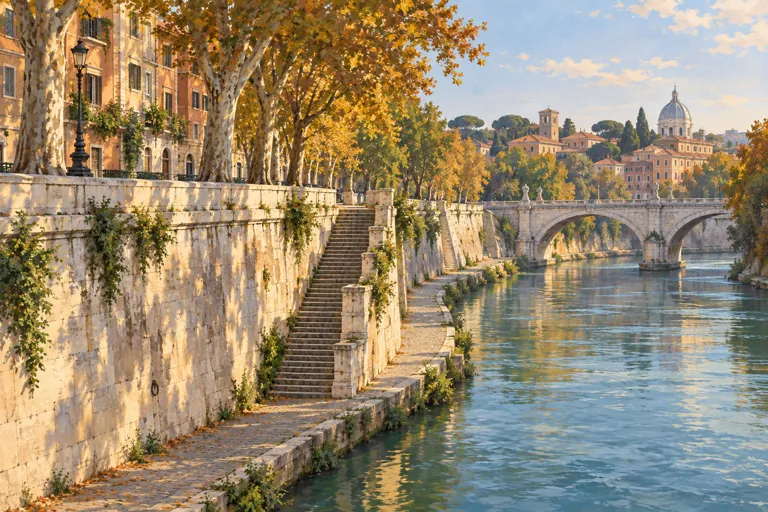
This is a rewarding counterpoint to Rome’s river embankments, another intervention that altered movement and the city’s edges. You need not compare their purposes as if they were identical. Instead, ask how each shaped a resident’s route and view. Rome becomes easier to read when monumental structures are also understood as things people had to navigate.
Check the route you can actually use
On 14 October 2026, the official visitor page listed restricted simultaneous capacity, a maximum visit of fifty minutes and a closed tower terrace. The wall walk follows the museum’s opening arrangements; it is not an independently accessible public promenade. Consult current notices before setting off, and do not plan around a terrace photograph that the available route cannot deliver.
The museum also warns of access limitations. If stairs or narrow historic passages are a concern, contact staff about your needs before travel. Our overview of small municipal museums can help you compare alternatives, but check each institution’s current conditions individually. A compact museum is not automatically an easy-access museum.
Build a focused visit rather than a race
Choose two details to remember: perhaps the changing entrance and the way a passage controls the view outside. Leave space to read the panels instead of treating every room as a checkpoint. With children, ask where they would stand to observe an approaching traveler, then compare their answer with the building. Keep this an observation game, without leaning over barriers or obstructing narrow passages.
Plan the journey using our Rome transport guide, then check the current route to the entrance on Via di Porta San Sebastiano. If you want to continue along the broader historic corridor, Colosseum Tour Hub’s Appian Way planning guide explains why that deserves its own time allowance. Compare Rome history experiences by actual meeting points and inclusions, and leave room for the gate to be a complete visit in its own right.
Sources & further reading
Turn a good read into a great day.
Find a highly rated Rome experience that brings these stories to life.
Explore related experiences →