Cerveteri from Rome: what changes when you visit an Etruscan necropolis?

A day at Cerveteri is not simply another version of a Roman Forum visit. The Necropolis of the Banditaccia is an Etruscan funerary landscape, and the first useful change is in the questions you bring. Instead of asking how a public square organised civic life, ask how people shaped places for burial and remembrance. The surviving architecture is extraordinary, but it does not give you a complete, unfiltered picture of every person who lived in ancient Caere.
Choose Cerveteri deliberately
The Parco Archeologico di Cerveteri e Tarquinia, or PACT, manages four sites: a necropolis and museum in Cerveteri, and a necropolis and museum in Tarquinia. Shared management does not make them one address. For a first excursion from Rome, identify which town and which entrance you mean before comparing transport or tickets. This article concerns Cerveteri; it does not propose combining all four sites in a single rushed day.
The Ministry of Culture’s Banditaccia description highlights the variety of funerary architecture and the Tomba dei Rilievi, whose walls represent objects through stucco and painted decoration. That evidence invites careful questions about representation. An object depicted in a tomb is not automatically an inventory of one household, and an impressive burial does not stand for the living conditions of an entire population.
Look at the spaces between tombs
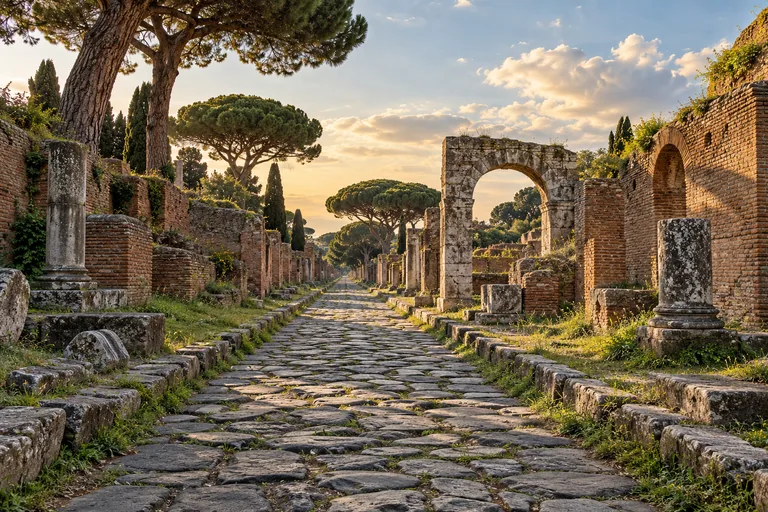
Begin with the layout you are allowed to follow. Notice the relationship between an entrance, the ground level and neighboring structures. Ask which elements are cut into the rock and which the site interpretation identifies as built or restored. You do not need to solve every construction detail yourself. A good first visit often consists of learning to distinguish what you can see from what requires an archaeological explanation.
Try making a small notebook entry with three headings: visible form, explanation on the sign, unanswered question. This prevents the atmosphere of the place from turning into an invented story about a named family. Our Barracco museum guide offers a related method for comparing objects from different cultures without flattening them into a single ancient world.
Put winter daylight before the museum
At our 3 November 2026 check, PACT’s dated seasonal timetable lists the necropolises from 09:00 to 17:00, with last entry at 16:00, for 25 October 2026 through 27 March 2027. Its ordinary schedule is Tuesday to Sunday; the museums have a longer published day, 09:00–19:30 with last entry at 18:30. Special programmes need their own confirmation rather than being treated as a permanent change to the weekly timetable.
For planning purposes, this makes the outdoor visit the more time-sensitive part. Work backward from the last entry, include the journey between the necropolis and the town museum, and leave a margin for finding the correct entrance. Check current notices before leaving Rome: the park specifically warns that adverse-weather alerts can lead to temporary archaeological-area closures. A forecast and an opening timetable answer different questions.
Ancient paths are not uniform pavement
PACT’s necropolis regulations explain that much of the visitor route follows ancient circulation, with uneven levels, earth paths and exposed rock. Choose footwear and a pace suited to that terrain. Anyone needing a step-free route should ask the park about the exact currently available circuit before travelling; a general description of the destination cannot establish access to an individual chamber.
Stay on the authorised route and treat barriers as part of the visit. Seeing a doorway does not mean it is open, safe or included. The same distinction is useful at Rome’s archaeological sites, as Colosseum Tour Hub’s Tomb of the Scipios article explains through a different Roman funerary context. The two sites belong to different histories and visiting arrangements.
Let the museum add a second kind of evidence
The Cerite museum is a separate stop, not a room reached automatically at the end of the outdoor path. Check the actual ticket coverage and any temporary-exhibition supplement on the park’s current page. Use the museum to compare information about objects with what you observed at the necropolis, while allowing that finds may have been moved, dispersed or displayed selectively. A location of discovery and a present display location are different facts.
Our Frascati day-trip guide helps with the general discipline of separating town time from booked activities, while the Palazzo Braschi article considers how a museum constructs a selective account. Compare options in the Rome day-trips collection only by their stated destinations and inclusions. A satisfying Cerveteri day gives one landscape enough time to become understandable.
Sources & further reading
Turn a good read into a great day.
Find a highly rated Rome experience that brings these stories to life.
Explore related experiences →