Rome’s Doria Pamphilj Gallery: how do you look at a portrait in a palace?

A palace gallery can make a visitor feel that every surface deserves attention at once. At Doria Pamphilj, try a smaller ambition: learn how one painted portrait and one sculpted portrait address you. You can enjoy the grand setting without turning the afternoon into a hunt for every famous name. The useful starting point is the relationship between a face, its material and the room in which you encounter it.
Start with the correct palace and entrance
The gallery’s current visitor page places the entrance at Via del Corso 305. This is not Villa Doria Pamphilj, the large park across the city, or Palazzo Pamphilj on Piazza Navona. Matching the address before leaving your accommodation is a small task with a large potential reward: arriving at the gallery you actually intended to visit.
When checked on 16 October 2026, the gallery listed Wednesday closure and recommended advance booking. The Secret Apartments and Bath of Diana have separate ticketing. Do not assume that a palace name on a booking includes every room associated with that palace. Confirm the exact admission, date and entrance rather than relying on a photograph of an attractive interior.
Give Velázquez time before reading the label again
The gallery’s Velázquez entry identifies the celebrated portrait of Pope Innocent X, painted around 1650. Before trying to remember a judgement about its greatness, look at the relationship between face, clothes, chair and background. Which element draws your eye first? Does the sitter seem close, distant, alert or still? Treat your response as an observation to explore, not a diagnosis of his private personality.
Then read the interpretation and return to the painting. Knowing who commissioned or sat for a portrait may change how you understand its presentation. Yet a painted expression does not give a visitor unmediated access to a historical person. It is a made image, with choices about color, pose, emphasis and what the viewer is allowed to see.
Compare what marble can do
Doria Pamphilj also documents Bernini’s portrait bust of Innocent X. The comparison is rewarding because the sitter remains the same while the medium changes. Marble has no painted red fabric to command attention; light, carved depth and the turn of the form carry more of the encounter. Use the permitted viewing positions and notice how a small change in angle alters the silhouette.
You do not need to decide which artist captured the “real” pope. A better question is how each work constructs a public presence. If a label distinguishes versions, dates or restoration, keep that distinction in your notes. Similar names do not make every portrait an interchangeable object, and a quick online image search is a poor substitute for the collection’s identification.
Let the display become part of the subject
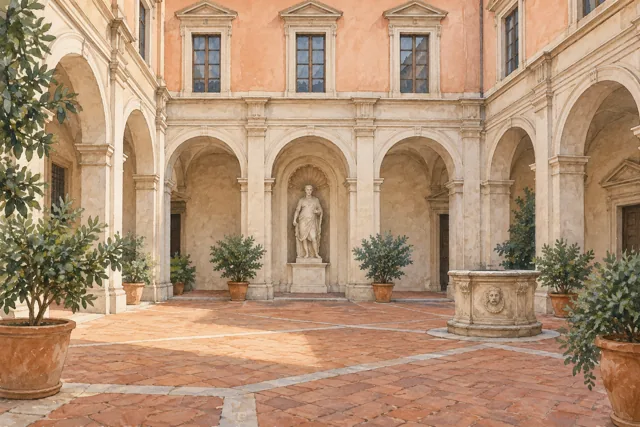
The official gallery introduction describes richly decorated spaces, including the Mirror Gallery. Look at how frames, reflective surfaces and adjacent pictures affect your attention. A densely hung wall encourages comparison across sizes and subjects; it can also make close looking tiring. Choose a few works and allow the rest to remain part of the room’s visual rhythm.
Our Barberini and Corsini guide offers another way to choose a Roman art afternoon. For a more intimate study of how architecture directs the eye, read about Galleria Spada. Neither comparison requires visiting all three on the same day. A clear memory of one painting is preferable to a blur of excellent collections.
Keep practical needs in the plan
The gallery’s access information notes stairs to the first-floor gallery, no cloakroom and limits on bags. Contact the venue about your specific mobility needs before committing; a central address does not guarantee a suitable route through a historic building. Carry only what you need, and follow current photography instructions without blocking another visitor’s view.
Our Palazzo Altemps article considers the different question of how collectors shape what survives and what is displayed. On a later Florence stop, Museo Horne makes a useful comparison in scale and domestic setting. These are connections for reflection, not claims that the collections have identical histories.
If you prefer guided interpretation, check the named stops and admissions in Rome’s cultural experience collection. Leave a little unscheduled time after the gallery. Over a drink or a short walk, describe the portrait you remember without looking at your phone. The details that return first can tell you what actually held your attention.
Sources & further reading
Turn a good read into a great day.
Find a highly rated Rome experience that brings these stories to life.
Explore related experiences →